
Sodium Hydroxide Manufacturing Plant
★ We leverage the industry’s robust technology portfolios,efficient management,to continue to develop cutting-edge technology to achieve our customers’ sustainability objectives.
Keywords:
ENGINEERING CASE
Chlor-alkali Chemical Industry
Caustic Soda Plant
Product details
Asia Chemical Engineering Co., Ltd. is one of the most reliable manufacturers and suppliers of sodium hydroxide manufacturing plant in China. Please rest assured to wholesale cost-efficient sodium hydroxide manufacturing plant from our factory. Good service and reasonable price are available.
Sodium Hydroxide Manufacturing Process
The sodium hydroxide manufacturing process depends on whether the project requires production from salt or further processing of an existing caustic soda solution.
For large-scale industrial production, the chlor-alkali process is the principal route for manufacturing sodium hydroxide from purified brine. Evaporation and concentration systems are used downstream to increase the NaOH concentration when required.
1. Brine Preparation and Purification
In a chlor-alkali plant, salt is dissolved in water to prepare a brine solution. The brine is then purified to remove impurities that could affect electrolyzer operation, membrane performance, and product quality.
The purification system may include dissolving tanks, clarification equipment, filters, chemical dosing systems, and other treatment equipment, depending on the feedstock and process design.
Effective brine purification is essential for maintaining stable electrolysis operation and protecting the downstream equipment.
2. Electrolysis for Sodium Hydroxide Production
Purified brine is fed into an electrolyzer, where an electrical current drives the electrochemical reaction.
In a membrane-cell process, sodium ions pass through a selective membrane to form sodium hydroxide in the catholyte compartment. Chlorine is generated at the anode, while hydrogen is produced at the cathode.
The overall reaction can be expressed as:
2NaCl + 2H₂O → 2NaOH + Cl₂ + H₂
This process produces sodium hydroxide alongside chlorine and hydrogen. The design must account for electrical power requirements, brine quality, gas handling, ventilation, process control, and applicable safety regulations.
3. Caustic Soda Evaporation and Concentration
The sodium hydroxide solution produced by membrane-cell electrolysis is typically more dilute than the concentrated product required by many industrial applications.
An evaporation system removes water to increase the NaOH concentration. Depending on the required output and operating conditions, the system may incorporate evaporators, heat exchangers, separators, condensers, circulation pumps, and associated instrumentation.
The evaporation process is designed around the inlet concentration, target concentration, production rate, available steam, and heat recovery requirements.
4. Product Cooling and Storage
After concentration, the sodium hydroxide solution may require cooling before transfer to storage or downstream processes.
Storage tanks, pumps, valves, and piping must be selected according to the actual NaOH concentration, temperature, and operating conditions. The layout should also provide suitable access for inspection, maintenance, and safe chemical handling.
5. Process Monitoring and Control
A sodium hydroxide manufacturing plant requires coordinated monitoring of key operating parameters, including flow rate, pressure, temperature, liquid level, and product concentration where applicable.
A chlor-alkali facility also requires dedicated monitoring and protection systems for electrical equipment, chlorine, hydrogen, and related process hazards.
The control system and safety interlocks should be specified according to the selected technology, plant design, and applicable regulations.
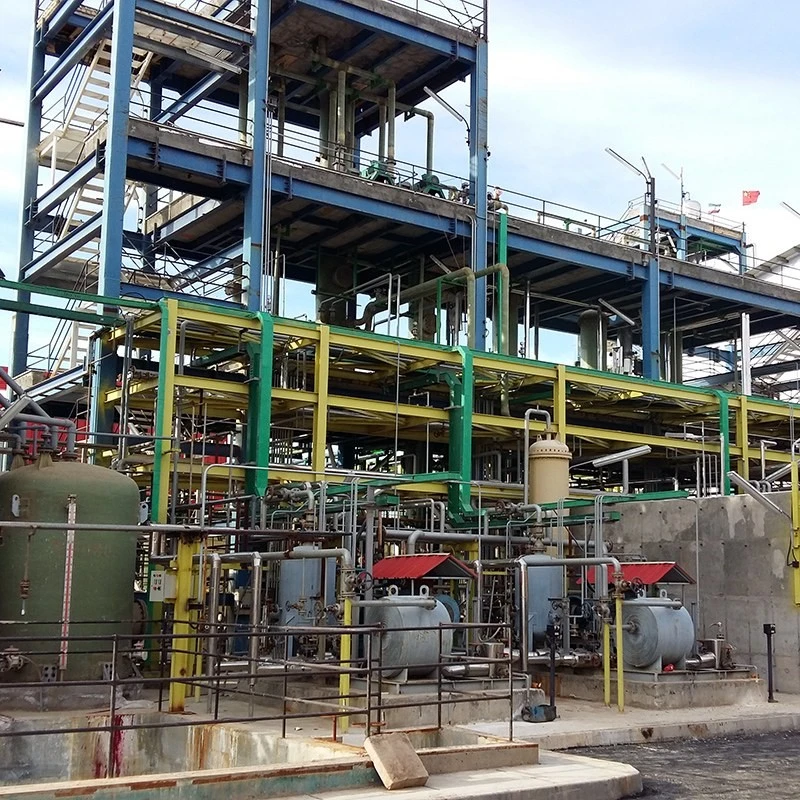
Main Equipment in a Sodium Hydroxide Manufacturing Plant
The equipment list depends on whether the project covers complete chlor-alkali production or only downstream caustic soda processing.

Sodium Hydroxide Plant Capacity and Product Specifications
Plant capacity and product concentration are key inputs for process design, equipment sizing, and investment estimation.
Before selecting equipment, buyers should define the required output and clarify whether capacity refers to the mass of sodium hydroxide solution or the equivalent mass of pure NaOH.
For example, a plant producing 100 metric tons per day of 50% sodium hydroxide solution does not produce 100 metric tons per day of pure NaOH. Its theoretical NaOH output is 50 metric tons per day, before accounting for operating losses or differences between rated and actual production.
Clear capacity definitions help buyers compare technical proposals on a consistent basis.
Engineering Considerations for Sodium Hydroxide Production
Material Compatibility and Corrosion Control
Sodium hydroxide can cause severe chemical burns and may be corrosive to certain materials under specific conditions. Material selection must account for concentration, temperature, impurities, and exposure conditions.
Tanks, piping, valves, pumps, seals, and heat exchangers should be evaluated individually rather than assigned a single material specification for the entire plant.
For chlor-alkali projects, additional compatibility requirements apply to brine, chlorine, hydrogen, and other process streams.
Energy Consumption and Operating Costs
Energy consumption is an important factor in the operating economics of a sodium hydroxide manufacturing plant.
For chlor-alkali electrolysis, electrical power is a major operating requirement. For caustic soda evaporation, thermal energy demand depends on the amount of water removed, inlet concentration, target concentration, and evaporation technology.
A project-specific energy balance can help estimate electricity and steam requirements, identify heat recovery opportunities, and compare alternative configurations.
Automation and Process Safety
Automated monitoring can help maintain stable operating conditions and identify abnormal process behavior.
Depending on the plant configuration, the control system may monitor temperature, pressure, flow, tank levels, electrical operating parameters, and product concentration. Chlor-alkali facilities also require suitable gas detection, ventilation, emergency shutdown arrangements, and safeguards for chlorine and hydrogen handling.
Safety equipment and control logic should be established through engineering assessment and in accordance with applicable local codes and regulations.
Installation and Plant Integration
A new sodium hydroxide manufacturing plant requires coordination between process equipment, utilities, electrical infrastructure, storage facilities, and downstream operations.
For an existing site, the engineering review should consider available space, foundation requirements, utility connections, equipment access, and tie-in points. For a new facility, these requirements should be addressed during preliminary design to reduce installation conflicts and commissioning delays.
Applications of Sodium Hydroxide Manufacturing Plants
Sodium hydroxide is an important raw material and process chemical across multiple industrial sectors.
Typical downstream applications include:
The intended application affects the required product concentration, purity, storage arrangements, and delivery conditions. These requirements should be confirmed during project planning.
How to Select a Sodium Hydroxide Manufacturing Plant Manufacturer
Choosing a plant manufacturer requires a review of technical capability, equipment scope, process compatibility, and project responsibilities.
Confirm the Production Technology
Determine whether the project requires complete sodium hydroxide production from salt, concentration of an existing solution, or preparation of a specified NaOH concentration.
This distinction affects the process design, equipment list, utility demand, capital investment, and project schedule.
Evaluate the Equipment Configuration
Request a process flow diagram, preliminary equipment list, utility requirements, and defined supply boundaries.
These documents help establish which systems are included and which must be provided by other contractors.
Review Materials and Operating Conditions
Confirm the proposed materials of construction, design temperatures and pressures, corrosion considerations, and relevant equipment standards.
The selection should be based on actual process conditions rather than generic equipment descriptions.
Clarify Engineering and Commissioning Responsibilities
Before placing an order, establish responsibility for detailed engineering, equipment manufacturing, inspection, installation, commissioning, operator training, and after-sales support.
The quotation should clearly distinguish services included in the contract from optional services or customer responsibilities.
Frequently Asked Questions
What is a sodium hydroxide manufacturing plant?
A sodium hydroxide manufacturing plant is an industrial facility that produces NaOH, commonly called caustic soda. A conventional large-scale facility typically uses chlor-alkali electrolysis to produce NaOH from purified brine, with chlorine and hydrogen generated as co-products.
How is sodium hydroxide manufactured industrially?
The principal industrial method is the chlor-alkali process. Purified brine is electrolyzed in suitable cells to produce sodium hydroxide, chlorine, and hydrogen. The resulting caustic soda solution may then be concentrated through evaporation to meet the required product specification.
What is the difference between a NaOH plant and a caustic soda plant?
The terms generally refer to the same type of facility because NaOH is the chemical formula for sodium hydroxide and caustic soda is its common industrial name. However, the exact scope may differ between a complete chlor-alkali plant and a downstream concentration or preparation line.
What concentration can a sodium hydroxide plant produce?
The achievable concentration depends on the production route, feed conditions, equipment design, and required product specification. Common industrial sodium hydroxide solutions include 32%, 48%, and 50% by weight, although the appropriate concentration and achievable operating conditions must be confirmed for each project.
Recommended products
Inquiry
Do you have any questions? We' ll get back to you.
Asia Chemical is a global engineering and technology company that provides first-class comprehensive solutions for daily chemical, basic chemical, oil, natural gas and food industries.
Contact Us
Please feel free to contact us with any questions. We’re here to help.


Contact Us
*Please keep your phone open, we will contact you promptly